
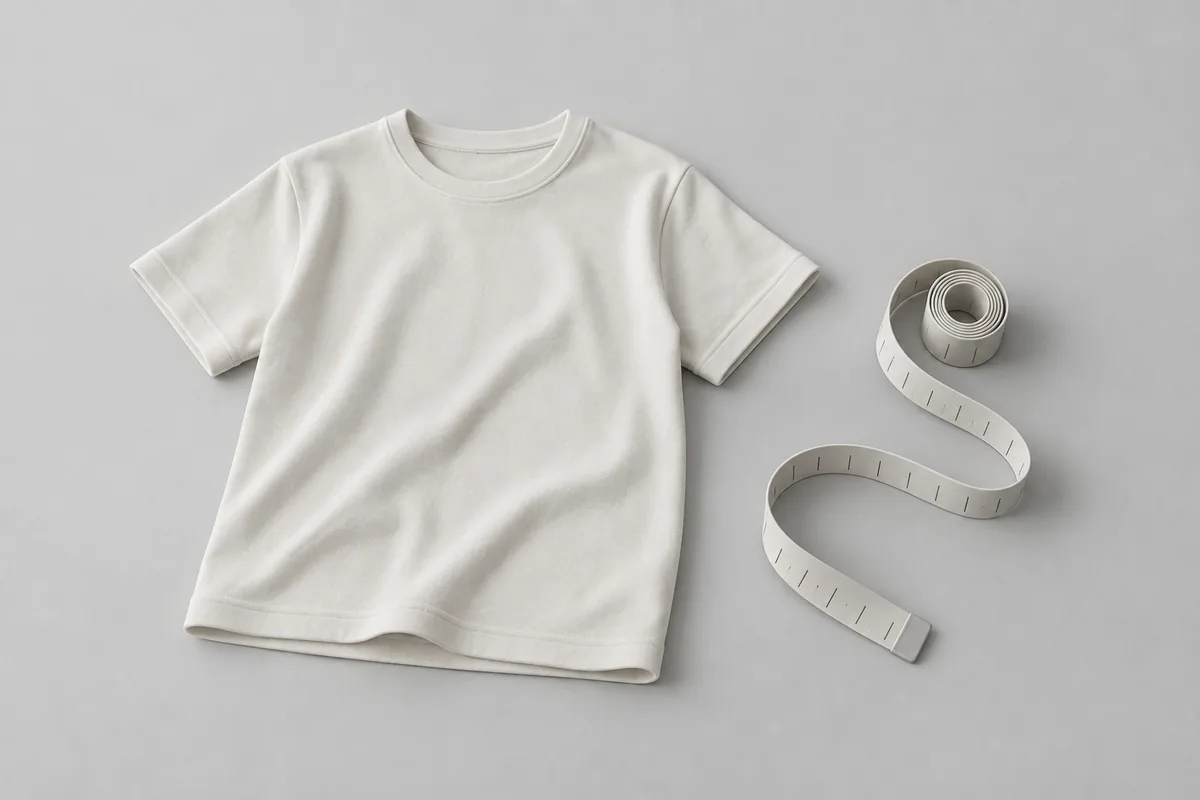
Check whether the chart measures the body or the garment
When choosing clothes online, begin with “What does this chart measure?” rather than “Am I an M?” Body measurements and finished garment measurements are different. Uniqlo Korea’s Korean-language guidance distinguishes them and says to measure garments laid flat. [1]
Nike’s U.S. men’s tops chart explicitly identifies its numbers as body measurements. In contrast, Size Guide on a Uniqlo Korea product page shows that product’s actual garment measurements. Even if the numbers look similar, first check that they refer to the same type of measurement. [2] [3]
Chest circumference measures all the way around the body or garment, while flat chest width measures across a garment laid out horizontally. If the chart only says “chest,” look for its measurement illustration or explanation rather than guessing from the unit. Do not choose a size by directly comparing circumference with flat width.
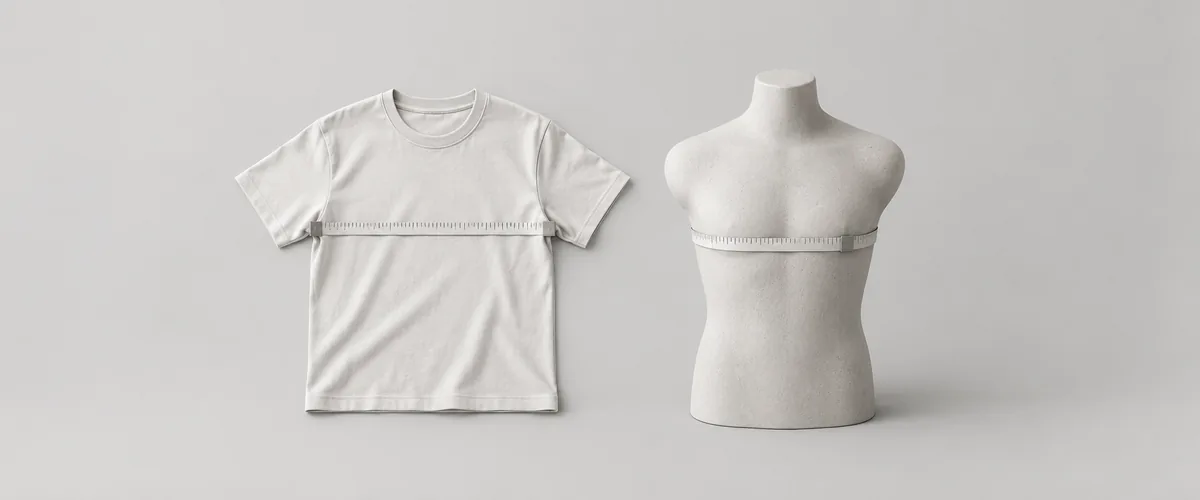
Compare garment measurements with a similar item that fits
For an actual garment chart, use a similar item you wear often as a reference. When buying a T-shirt, choose another garment with a similar type and desired fit rather than a thick padded coat. Note if the reference item feels too large or small.
Lay the reference garment on a flat surface and smooth out wrinkles before measuring. Uniqlo Korea warns that wrinkles or different measuring points can produce different results. Do not stretch the garment to make the numbers match; locate the same points shown in the product’s measuring diagram. [1]
For example, if your garment has a flat chest width of 52 cm and the product chart lists 54 cm for the same measurement, the new garment is 2 cm wider across. That difference alone cannot tell you which body shape it will fit, so compare the other measurements too.
If only a body chart is available, do not insert your reference garment’s flat width into it. Compare a chart labeled as body measurements with the brand’s instructions for measuring your body. Follow the stated condition first, as with Nike’s body-based tops chart. [2]
Check length, shoulders, and sleeves alongside chest width
Even when chest widths are similar, check the length separately. Remember where the reference garment’s hem and sleeves fall when worn, and compare corresponding measurements. Decide whether you want a long item or one to tuck into trousers before choosing.
Check the starting points for overall length and sleeve length too. A sleeve measured from the shoulder cannot be directly compared with one measured from the center back of the neck. Match the starting and finishing points in the product diagram on your reference garment rather than matching names alone.
Uniqlo Korea explains that fit and silhouette can differ by design even within the same labeled size. Matching one chest measurement therefore does not establish that shoulder shape or arm room will also match. Review the design description alongside the measurements. [1]
If the measuring method is missing or a label is unclear, ask the seller about the particular field: for example, “Is sleeve length measured from the shoulder seam or the center back of the neck?” Clarify the uncertain points instead of deciding from the photograph alone when numbers are absent.
Recheck the product and sales region even for the same M
Do not skip the new product’s chart just because you have bought from that brand before. Uniqlo Korea says actual measurements can vary by product and advises checking the product page’s Size Guide and product-size comparison. Match the exact product and selected size when comparing. [3]
A South Korean store may also sell products made to overseas sizing standards. Nike Korea’s Korean-language customer guidance explains that it sells KR and US products, so alphabetical hangtag sizes can differ. Before treating a tag letter as evidence of a wrong delivery, check the number in parentheses and that product’s size chart. [4]
When using an overseas official chart, verify that it corresponds to the product being sold. Nike’s U.S. men’s tops chart is not a universal conversion chart for Korean women’s clothes or every brand. Avoid converting different brands’ S, M, and L labels with one formula.
Record the product number, sales region, and chart units to avoid comparing the wrong screens. Recheck centimeters versus inches and whether the chart is for men, women, or unisex garments. When comparing two candidates, first make sure the charts use equivalent conditions.
Clarify uncertain details before ordering
Use reviews from people with the same weight or usual size only as a starting point. Base your order on the product chart, your reference garment’s measurements, and the fit you want. Uniqlo’s warning about design-dependent fit means one review cannot guarantee the same fit for you. [1]
Check stretch, whether the garment is designed to fit closely, and whether you will wear other clothes underneath. After narrowing choices with measurements, compare the described fit and intended use. Do not make a fixed rule that every garment needs a certain number of extra centimeters or that you should always size up.
If you are between two sizes, tell the seller your reference garment’s measurements and desired fit. Explaining “This is the chest width and length of my well-fitting T-shirt, and I want a similar fit” gives a clearer basis for comparison than “I usually wear M.”
Finally, check the size selected on the order screen and the exchange and return conditions. These vary by seller, so read the current guidance where you will buy. Actual fit remains a judgment even after checking measurements and descriptions; match the information you can verify before ordering.