
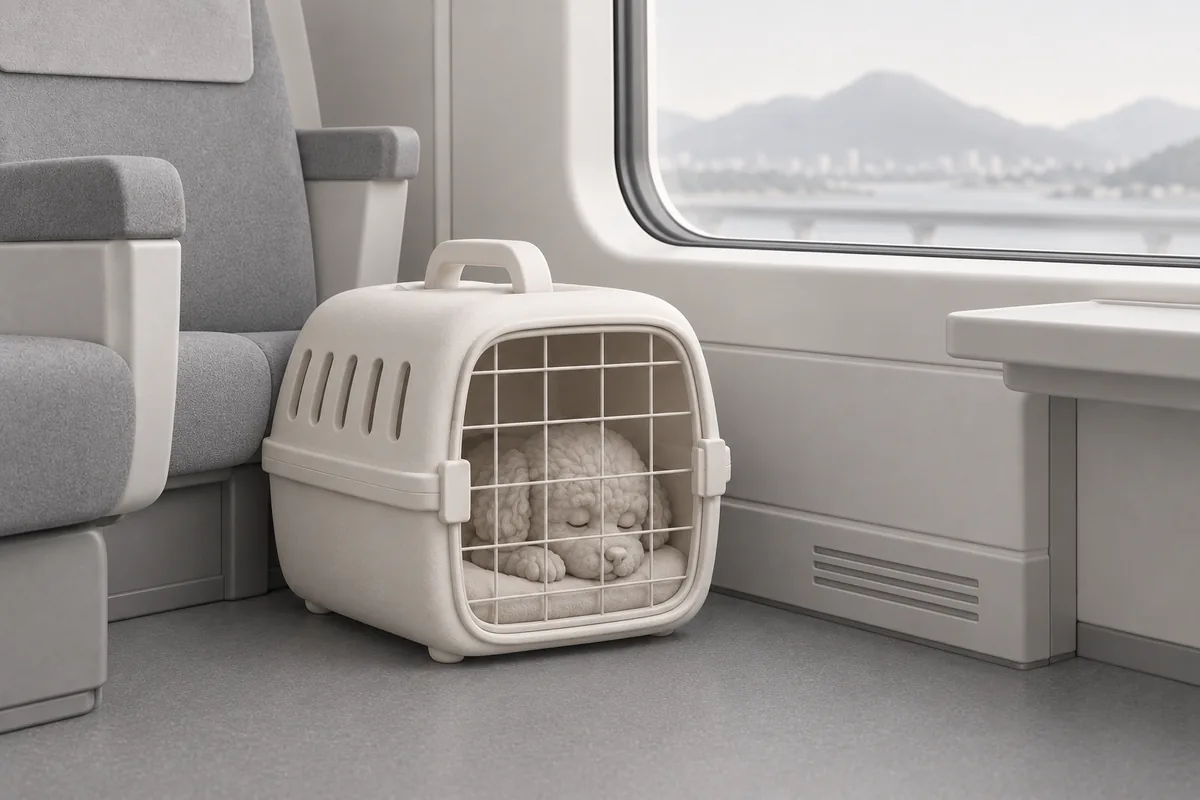
First check whether you are taking KTX or SRT
If you plan to travel by train with a pet, first identify the operator of the train you will book. This guide covers KTX and other trains operated by Korea Railroad Corporation, or Korail, in South Korea. Do not apply SRT’s or an airline’s carrier dimensions and seat rules simply because the train is also a high-speed service.
Korail’s official Korean-language FAQ says a pet may travel in a dedicated bag without inconveniencing other passengers, provided it has required vaccinations such as rabies. Being able to buy a ticket and meeting the pet-travel conditions are separate matters; check both before booking. [1]
If your journey includes a bus or subway connection, check that leg separately too. South Korea’s Easy Law guidance, cited here in Korean, explains that pet conditions on city, express, and intercity buses may vary by transport company. Do not assume a carrier accepted on the train is accepted on every later service. [3]
Check carrier dimensions and where it can be stored
Prepare a dedicated carrier or bag that closes so the pet is not exposed outside it. Easy Law says pets must be contained so they are unlikely to harm or inconvenience others, and the pet together with its carrying equipment must stay within limits that do not occupy a seat or aisle. Carrying a pet in your arms or using only a leash is not equivalent to using a carrier. [3]
Korail’s current Korean-language passenger terms generally allow no more than two carry-on items that do not occupy seats or aisles, with detailed allowances set separately. Check whether you can store your other luggage as well as the carrier. Avoid a plan that leaves large baggage in the aisle for other people to walk around. [2]
Before departure, measure and note the carrier’s width, depth, and height and its total weight with the pet inside. Because Korail sets detailed carry-on allowances separately, ask about the actual carrier and train type you will use. A product page saying “suitable for train travel” does not establish acceptance for your journey.
Try lifting the carrier with the pet inside and check that its door and locks close properly. Confirm the actual dimensions rather than booking on the assumption that it will definitely fit under a seat. If it does not fit after boarding, ask a crew member where it can be stored instead of putting it in the aisle.
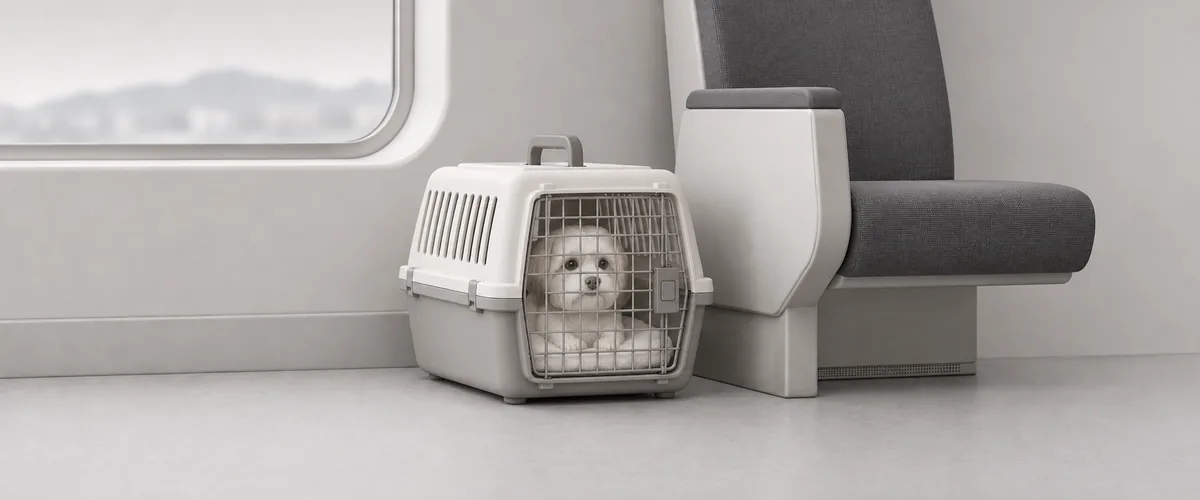
Prepare vaccinations and supporting records
Korail’s FAQ and passenger terms require appropriately vaccinated pets to travel in a dedicated carrier or bag. The FAQ specifically gives rabies vaccination as an example. If you are unsure which vaccinations are required or when they were given, check with the veterinary clinic first. [1] [2]
Have information that confirms the vaccination record ready so you can explain it if asked. However, Korail’s FAQ does not say a certificate in one particular format is mandatory in every situation, so do not assume a required format or presentation method. Ask Korail whether any documents are needed.
Registered assistance dogs for people with disabilities may have separate conditions from ordinary pets. Easy Law describes separate public-transport provisions for assistance dogs wearing the designated assistance-dog identification mark. If applicable, check the assistance-dog guidance instead of trying to fit ordinary pet-carrier rules. [3]
Check the adult fare for a separate pet seat
Korail’s official FAQ says a separate seat needed for a pet must be issued at the adult fare. Do not choose an infant or child discount ticket based on the pet’s age or size. Check the guardian’s discount eligibility separately from the issuance rules for the additional seat. [1]
Buying an extra seat does not remove carrier or vaccination conditions. It does not purchase permission to take the pet out and sit it on a seat. If you want to place the carrier on an extra seat, ask Korail about the placement and pet-travel conditions allowed on that train.
If you are unsure how to select passenger numbers or discounts on the booking screen, contact a station ticket office or Korail customer support before paying. Explain that one guardian with one carrier wants to buy an additional pet seat, and give the departure and arrival stations and train so the relevant conditions are not missed.
Prepare to manage the carrier from boarding to arrival
On departure day, recheck the carrier, ticket, and vaccination records, along with the handle and locks. Pack cleanup items such as waste bags and absorbent pads separately so you can reach them without opening the carrier. For a connection, consider whether you can safely carry the carrier and your other luggage together.
On the train, meet the conditions that prevent harm or inconvenience to other passengers. The current terms make passengers responsible for storing and managing their carry-on items. Do not leave the carrier open because the carriage is quiet, or spread the bag in the aisle because the pet is anxious. If a problem occurs, ask the crew for help instead of trying to settle it directly with nearby passengers. [2]
When asking about travel, provide the train type, the carrier’s three dimensions, combined animal-and-carrier weight, pet type, required vaccination status, and whether you need an extra seat. Recheck current guidance if conditions have changed between your booking inquiry and boarding. Preparing for the return train and station too can avoid a last-day search for the rules.