
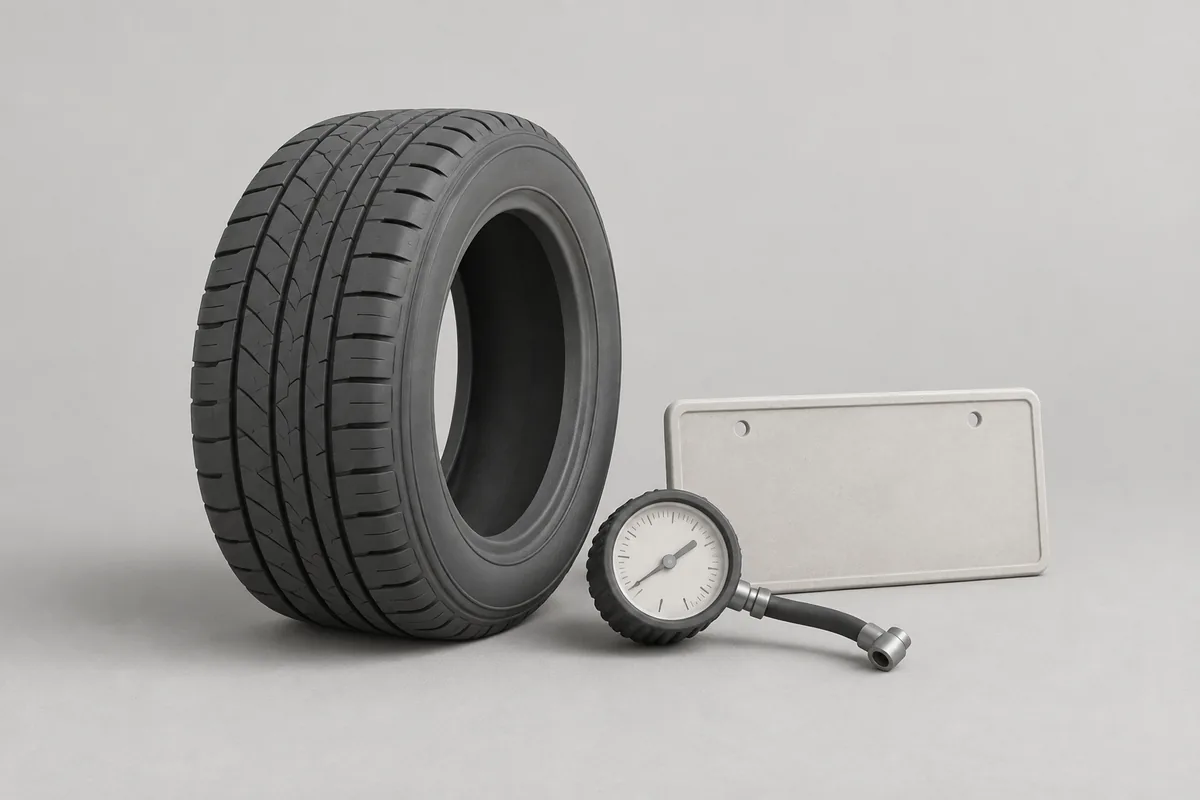
If driving, stop safely and inspect the tires
Do not brake abruptly or turn sharply just because the light appears. Hyundai’s Korean-language IONIQ 6 manual advises slowing down and avoiding sharp cornering when the low-pressure warning comes on. Find a safe place to stop and inspect the condition rather than continuing to your destination. [1]
If the car pulls to one side, a tire looks collapsed, or major damage is visible, do not drive in an attempt to clear the warning. BYD Korea’s Korean-language SEALION 7 manual says to stop driving when tire damage is suspected rather than waiting for an alert. Request roadside assistance or repair help from a safe location. [2]
After stopping, record the indicated wheel position and warning message. If your vehicle displays a number for each wheel, you can photograph it. A tire that looks normal does not establish that its pressure is correct. TPMS does not replace regular pressure checks. [1] [3]
Find the vehicle recommendation rather than the tire sidewall value
Find the pressure to use in your vehicle’s manual or tire pressure label. The label may be on the driver’s door edge or door frame. The U.S. NHTSA advises using the pressure recommended by the vehicle manufacturer rather than the value on the tire itself. Do not use one PSI value for every car. [3]
Check the tire size, front and rear wheel values, and pressure units together. If the label lists two conditions, read the one matching your passengers and load. Even cars with the same name may have different model years or fitted tires, so do not copy another vehicle’s number from the internet.
For example, if the dashboard shows kPa and the inflator shows PSI, match the units before comparing numbers. A photograph of the label helps share the relevant conditions with a repair shop. If the label is hard to read or the fitted size differs from the manual, ask the manufacturer’s service center before adjusting pressure.
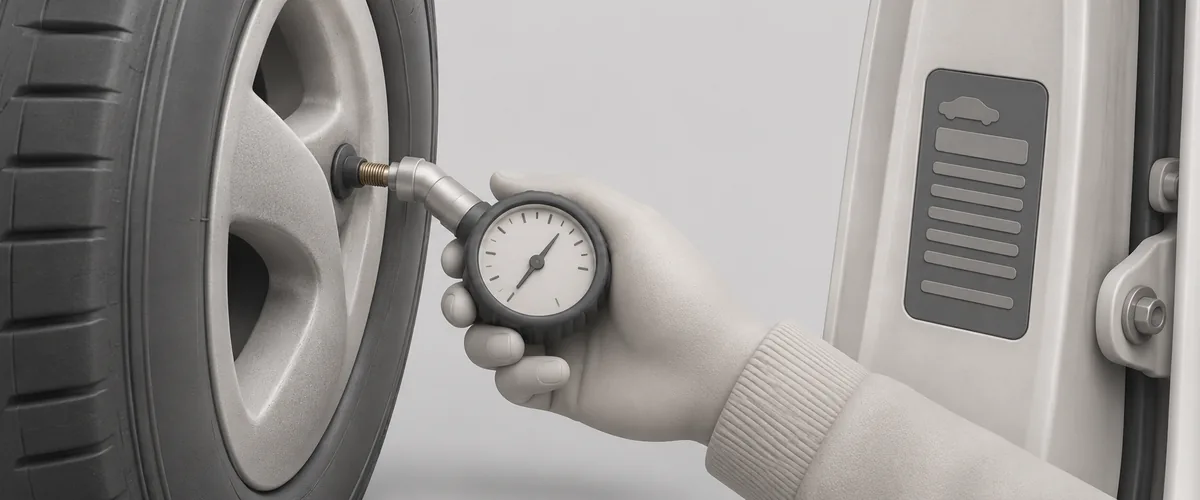
Measure when the tires are cold
Driving warms the tires and can change their pressure. The Hyundai IONIQ 6 and BYD SEALION 7 manuals describe measuring or adjusting after the vehicle has been parked for at least 3 hours or driven no more than 1.6 km. Recheck the exact cold-tire conditions in the manual for your own model and year. [1] [2]
Do not release air from hot tires simply to lower a high reading to the cold recommended value. BYD explains that pressure may be higher after driving; reducing it to the cold value then can leave the tires underinflated later. Warm readings and cold reference values are not measurements under the same conditions. [2]
Record all four wheels’ readings with the unit and whether you measured before or after driving. Measuring immediately after parking and before departure the next day are different conditions. If you are unfamiliar with connecting a gauge or using an inflator, have a repair shop check the tires against the vehicle recommendation instead of forcing an attempt.
Investigate pressure loss or repeated warnings
If the same wheel triggers repeated warnings after adjustment, note when and where its pressure dropped. BYD’s manual says to locate the leak when tire pressure begins to fall. Continually adding air does not establish that the cause of the leak has been fixed. [2]
A sudden cold day can trigger a warning through temperature changes. Hyundai’s IONIQ 6 manual also explains that previously correctly inflated tires may show a low-pressure warning in cold weather. Even so, do not dismiss it as weather alone; inspect the tires and check against the vehicle’s recommended values. [1]
If the warning flashes and then stays on, or a message asks you to check the tire pressure monitoring system, the system may need inspection as well as the actual pressure. BYD’s manual describes separate indications for system faults. Warning behavior varies by model, so check the exact message in your vehicle’s manual. [2]
Record actions and readings instead of just clearing the light
Some vehicles may require a confirmation or relearning procedure after pressure adjustment or tire replacement. These procedures vary by manufacturer and model, so do not copy an online button sequence to a different car. Resetting the system does not repair tire damage or an air leak.
Do not overinflate tires to switch off the light, or drive a set distance on a tire you suspect is damaged. Hyundai warns that continuing to drive on underinflated tires can cause overheating and failure. If using a tire repair kit or spare tire, check the conditions and restrictions in your own vehicle’s manual too. [1]
When requesting service, explain when the warning began, each wheel’s reading, whether the tires were cold, whether the warning returned after inflation, and any recent tire or wheel replacement. Have persistent problems checked again even after correct adjustment. Before the next drive, inspect the tire condition and recommended pressure as well as the warning light.