
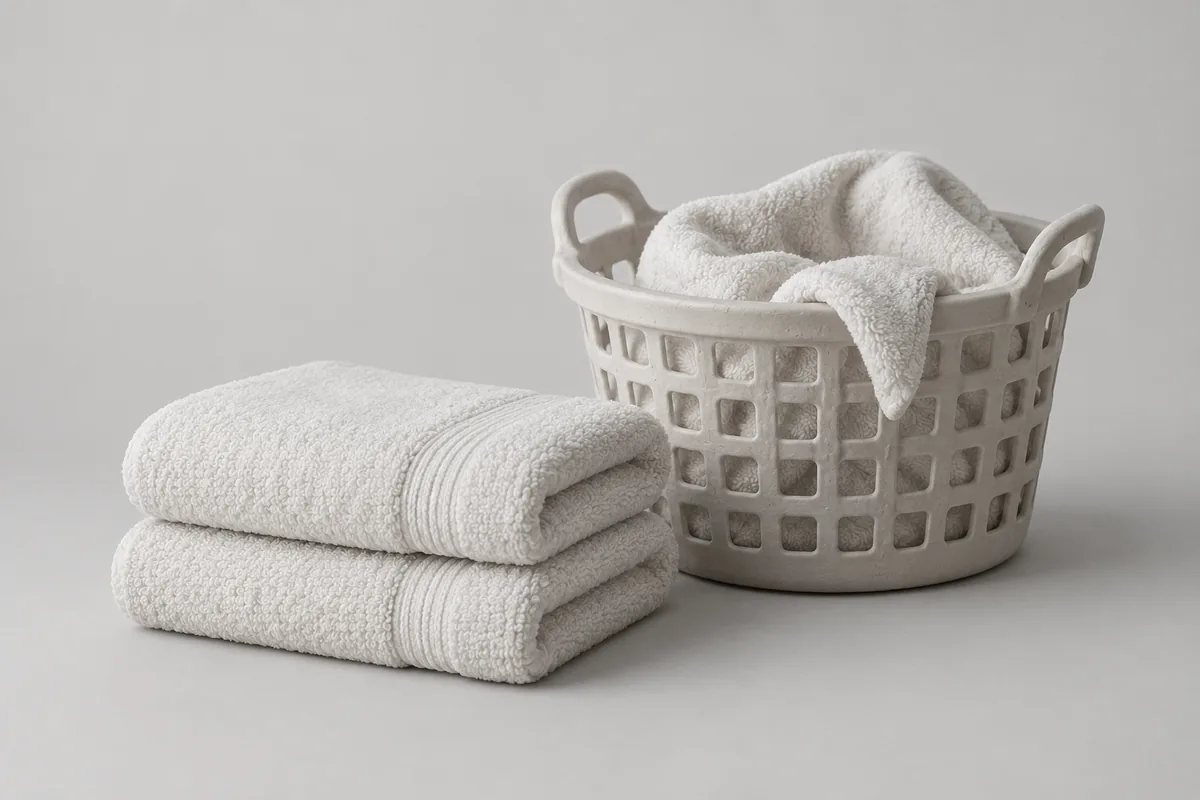
Read the care label before using hot water
Start with the label before washing the towels again. Decorations or mixed materials can change the washing and drying requirements. The manufacturer’s guidance also says to prioritize the towel’s care instructions. [1]
Note the permitted temperature, bleaching, and tumble-drying conditions. A smell is not a reason to exceed the allowed temperature or immediately choose a boil-wash cycle. Choose the cycle after reading the label. [1]
It also helps to treat white and dark-colored towels according to their individual requirements. If there is no care label, ask the seller about the material and care method, and avoid strong treatments until you know. Photographing and identifying each towel’s label makes it easier to check again next time.
Reduce the load and follow the detergent dose
If the drum was packed full of towels, reduce the next load first. Towels need room to move, and manufacturer guidance warns against overloading the washer. Remember that towels become heavier when wet, and avoid putting them all in at once. [1]
Measure detergent using the product’s dosage instructions rather than the amount of foam. Too much can leave a buildup of residue. If your model requires HE detergent, check that requirement too. This does not mean every washing machine sold in South Korea requires an HE label. [1] [3]
Before increasing fabric softener to cover the smell, check whether it suits the towels. Whirlpool explains that fabric softener and dryer sheets can affect absorbency. Adjust one factor at a time and compare. [1]
A simple record is enough. Note how many towels you loaded, the cycle, and the detergent amount. Remembering those conditions when the smell recurs helps you spot repeated factors before buying a different detergent each time.
Take towels out as soon as washing finishes
Check whether you leave towels in the washer until the next day despite the end-of-cycle alert. Samsung Electronics Service’s Korean-language guidance says moisture can cause odors when wet laundry is left for a long time. Consider changing what happens immediately after washing rather than focusing only on rewashing. [2]
Keeping used, wet towels inside a closed washer drum can also lead to odors. Check separately where you put towels after using them and when you remove them after washing. Leaving them wet before a wash and after a wash are different checks. [2]
If you cannot hang them up immediately, adjust the wash start time. Instead of starting before work and emptying the washer at night, choose a time when you can begin drying as soon as the cycle ends. If the washer supports a delay function, check the manual for how to set the finish time.
Check thick areas are dry before folding
If towels seem fine after washing but smell when taken from the cupboard, check whether they were fully dry when folded. Remaining moisture can cause musty odors; the guidance advises drying towels completely and storing them in a cool, dry place. [1]
When air-drying, check whether towels overlap, and inspect the edges and thick seams as well. Do not fold dry and still-damp towels together. Feeling the fabric checks dryness; it is not a test that establishes the towel’s hygiene.
Use only dryer settings permitted by the label. High heat or excessive drying can damage the material. Check the towel cycle and care instructions instead of simply turning up the temperature. [1]
Inspect the washer if other laundry smells too
Distinguish a problem with one towel from the same smell in other towels and clothes. If several loads retain an odor and the drum smells too, there is reason to inspect washer maintenance. Samsung’s official Korean guidance explains that a dirty drum can lead to laundry odors and foreign matter. [2]
Before cleaning the drum, check your washer’s manual for the cycle name and permitted cleaners. Samsung says to run drum cleaning without laundry inside. Putting towels in to clean them at the same time can damage or discolor the fabric. [2]
Do not copy another model’s cleaner quantity or drum-cleaning interval. Whirlpool’s odor guide describes the Clean Washer cycle for the washers it covers. If your model lacks that feature or uses different cleaners, prioritize its own instructions. [3]
If the smell returns after rewashing, prepare the model number, cycle, detergent amount, when the smell appears, and whether other laundry is affected before contacting the manufacturer. Do not diagnose mold or drainage trouble from odor alone. Describing the conditions you checked makes it easier to choose the next inspection.